Sheds of Contention: Ten Allotment Feuds Cross-Examined Over a Thermos
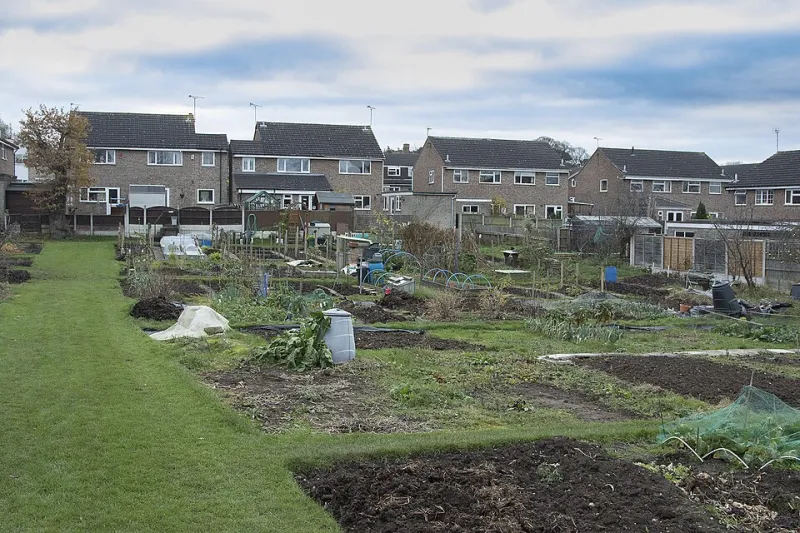
Photo: Malcolm Neal , CC BY-SA 2.0, via Wikimedia Commons
A parish council emergency meeting is a rare and sacred thing. It is usually convened for a burst culvert, a planning wobble or a councillor who has said something regrettable on Facebook. Occasionally, however, it is summoned because two grown adults cannot agree on where one person's compost heap ends and another person's dignity begins.
Welcome to the allotment. A place of quiet industry, seasonal optimism and the most exquisitely petty jurisprudence known to British civic life.
Below, ten feuds that have rattled the padlocks of the nation's plots, ranked from "settle it with a flask" to "book the village hall and warn the vicar". Each case has been examined under the Upper Ten judicial protocol: one thermos, two custard creams, and a verdict delivered before the tea goes cold. Plot numbers have been withheld. Names have been changed to things like "Mr Fairweather" and "Mrs Pratt", which is arguably worse.
The Tribunal's Standing Orders
Before we begin, a note on procedure. British allotment disputes are governed by three unwritten rules: the person who arrives earliest owns the path; the person with the largest marrow is never wrong until proven otherwise; and any grievance older than three years must be referred to as "the situation".
Our sentencing options are limited. We can recommend a Caution (polite nod), a Warning (nod with eyebrow), a Formal Sigh (audible), or the Full Emergency Meeting (folding chairs, minutes, thermos, lingering resentment until 2031).
10. The Great Hose Infiltration
The charge: Illicit use of a hosepipe during a drought order, conducted at dusk and disguised by a strategically placed wheelbarrow.
The defence: "It was a watering can, and I was moving it quickly."
Verdict: Caution. The tribunal notes that a watering can does not, as a rule, have a threaded connection. But the accused did look genuinely ashamed, and the beans were superb.
Sentence: One shared pot of tea and a lecture on water butts, delivered by the plot secretary, who has been waiting years for this.
9. Scarecrow Plagiarism
The charge: Constructing a scarecrow with a waxed jacket, a flat cap and a moustache so specific that it constituted an unflattering portrait of the neighbouring plot-holder.
The defence: "It's a generic farmer."
Verdict: Warning. It was not generic. The scarecrow had the same limp and a tiny sign reading "MIND MY LEEKS" in a handwriting that was, frankly, evidence.
Sentence: The scarecrow must be re-dressed. The moustache must be removed. The flat cap may stay, on the grounds that everyone owns one.
8. The Bonfire Smoke Incident
The charge: Lighting a bonfire on a still Sunday afternoon, sending smoke directly across three washing lines and one newly varnished shed.
The defence: "It's a traditional allotment activity."
Verdict: Partially upheld. Tradition is not a defence. Neither is "the wind changed". The wind did not change; it was lured.
Sentence: A Formal Sigh, plus the accused must check the weather app before ignition and must not refer to it as "a controlled burn" ever again.
7. The Water Butt Annexation
The charge: Redirecting a downpipe from a communal shed into a private water butt, thereby privatising rainfall.
The defence: "It's only water."
Verdict: Upheld. Rain falls on everyone. The tribunal takes a dim view of anyone claiming ownership of the sky.
Sentence: Full re-plumbing, a public apology pinned to the noticeboard, and a six-month ban on using the phrase "my reserves".
6. The Netting Escalation
The charge: Erecting a six-foot fruit cage that cast shade on next door's tomatoes, allegedly to protect two raspberries and a grudge.
The defence: "Birds are a menace."
Verdict: Caution. Birds are indeed a menace, but so is a man with a roll of netting and a sense of destiny.
Sentence: The cage must be lowered. Both parties must share a flask. The raspberries are to be divided equally until the end of time or the next frost, whichever comes first.
5. The Bench Placement Dispute
The charge: Installing a commemorative bench on the main path, narrowing it to a width that renders a loaded wheelbarrow impassable.
The defence: "It's for the community."
Verdict: Upheld. A bench is a fine thing. A bench that causes a traffic jam of compost is a provocation with armrests.
Sentence: The bench must be moved eighteen inches. The plaque may stay. The plaque does not make it legal.
4. The Rhubarb Snapping
The charge: Harvesting three sticks of rhubarb from a neighbouring plot and describing the act as "helping out".
The defence: "It was going over."
Verdict: Serious. Rhubarb is a forgiving vegetable, but it is not a communal one. The tribunal notes that "helping" usually involves asking.
Sentence: Replacement of the rhubarb in kind, plus a written note. The note must be friendly. Passive-aggressive notes are the subject of a separate tribunal and a much longer lunch.
3. The Shed Height Arms Race
The charge: Building a shed that exceeded the permitted height, thereby casting a shadow over a prize-winning leek bed and, more importantly, over someone's pride.
The defence: "It's not a shed, it's a store."
Verdict: Upheld. The tribunal has seen the photographs. It is a shed. It has a window, a door and an air of superiority.
Sentence: Full planning review, an apology to the leeks, and a compulsory tea round at the next association meeting.
2. The Prize Marrow Sabotage
The charge: Presenting a marrow at the annual show that had been hollowed, filled with wet sand and re-sealed in a manner the judges described as "ambitious" and the police described as "not really a police matter".
The defence: "It grew like that."
Verdict: Guilty. Marrows do not grow with a resealable flap.
Sentence: Disqualification, return of the rosette, and a lifetime ban from the weighing-in table. The Full Emergency Meeting was correctly convened. The minutes run to four pages.
1. The Compost Border War
The charge: Slowly extending a compost heap across a shared boundary until it occupied a strip of neighbouring plot roughly the size of a small car, with the accused claiming "it's all organic matter".
The defence: "Borders shift."
Verdict: Upheld, with costs. Borders do not shift. Compost shifts. There is a difference, and the difference is six inches of well-rotted manure and thirty years of resentment.
Sentence: Immediate removal, a re-pegged boundary, and the two parties placed on opposite sides of the association's Christmas raffle. The tribunal recommends a buffer zone of at least one marrow.
The Appeal Process
Any party may appeal by writing to the secretary, who will read the letter, sigh, and put it in the folder marked "Later". Appeals are heard in spring, weather permitting, and are traditionally resolved by everyone pretending it never happened.
The Upper Ten verdict, as ever, is this: allotments are a beloved British institution precisely because they allow us to be deeply unreasonable in a beautifully orderly way. And if you cannot settle a dispute over a shed and a flask of tea, you were never really there for the vegetables.